Clam
Freshwater Golden Clam
Corbicula fluminea · also called Asian clam
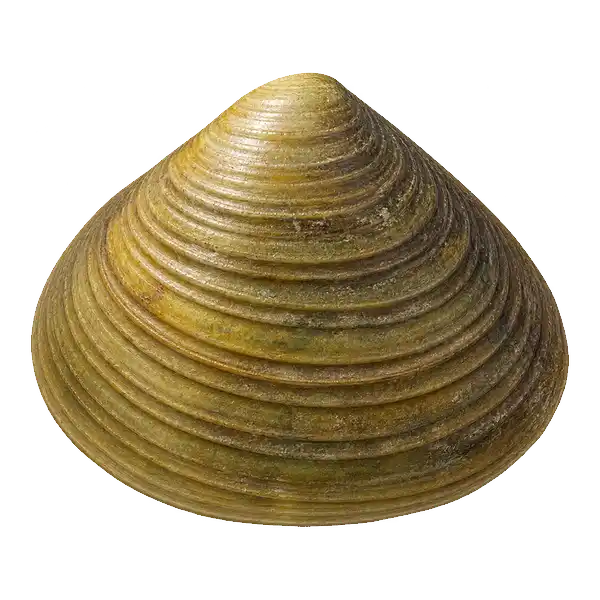
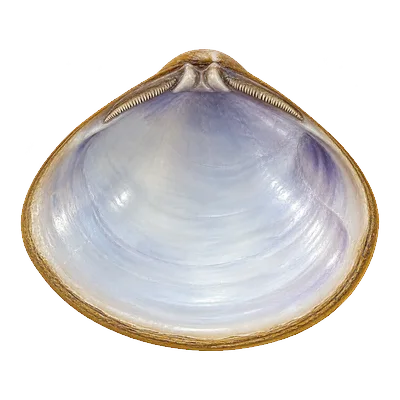
These illustrations are AI-generated, not photographs, and are not to scale. They show what to look for; they are not a substitute for an expert identification.
How to identify it
Size: Usually 1 inch or less.
- A thick shell shaped like a rounded triangle.
- Heavy, evenly spaced ridges running around the shell like growth rings.
- Yellow-green to golden-brown on the outside.
- Pale purple or bluish-white on the inside.
- Fine teeth along the hinge where the two halves meet.
Don’t confuse it with
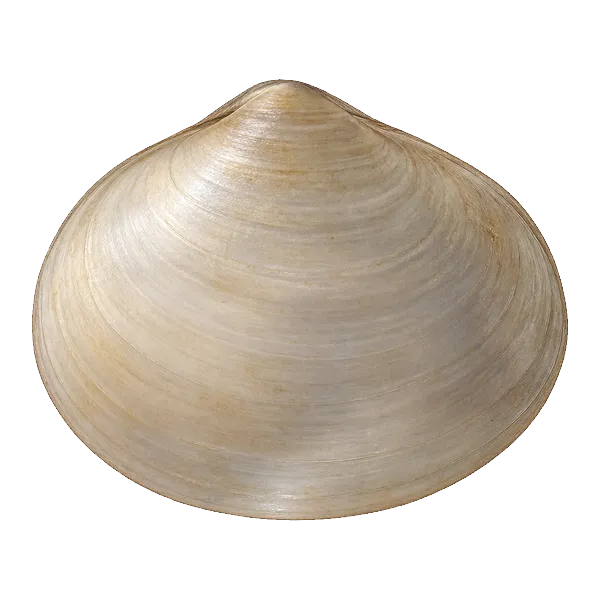
Native fingernail and pea clams are small, thin and smooth, without heavy ridges. Native mussels are much larger.
Where it came from
Native to Asia, Africa and Australia.
First found in North America on the Pacific coast in the early 1900s. In the Great Lakes it is often found near warm-water discharges such as power plants.
Earliest dated Ohio record: 1962, Ohio River at Cincinnati, Hamilton County. This is the oldest dated record in the USGS non-native species database, not necessarily when it first arrived.
Why it matters
It can build up in very large numbers, clog water intakes and compete with native clams and mussels for food.
Ohio law
Not on Ohio's injurious aquatic invasive species list or its invasive plant list. Ohio law still forbids releasing any fish or aquatic invertebrate into a water it did not come from without Division of Wildlife permission. Not the same animal as the golden mussel (Limnoperna fortunei), which Ohio does list. Ohio DNR’s aquatic invasive species page.
If you find it
- Don’t move it. Before leaving the water, clean off all plants, animals and mud, drain water from your boat, live well, bilge and bait bucket, and let everything dry before you launch somewhere else. Ohio DNR asks every boater and angler to do this.
- Never release bait or pets. In Ohio it is illegal to release any fish or aquatic invertebrate into a water it did not come from without Division of Wildlife permission. Put unused bait in the trash. Bait and invasive species
- Report it. Take a photo, note exactly where you saw it, and send it to the Ohio Division of Wildlife with its aquatic invasive species reporting form, or call 1-800-WILDLIFE (1-800-945-3543). Experts there can confirm what you found.
- Ask before treating. Before using herbicides or other treatments in a lake, ask the lake’s owner and the Ohio DNR what permission is needed.
Ohio lakes where it has been recorded
11 Ohio lakes on this site have a record of this species.
Clermont
Delaware
Franklin
Guernsey
Mahoning
Muskingum
Noble
Richland
Scioto
Warren
A lake that is not listed may still have it. Records exist only where someone found the species and reported it, so “not recorded” does not mean “not present.”
Lake records: the U.S. Geological Survey Nonindigenous Aquatic Species database, matched to each lake by the record’s own coordinates. A record means the species was found there at least once, not that it is there now.
Sources
- USGS Nonindigenous Aquatic Species: Asian clam fact sheet
- Ohio Administrative Code 1501:31-13-01 (release of fish and aquatic invertebrates)
Earliest dated record: USGS Nonindigenous Aquatic Species database.